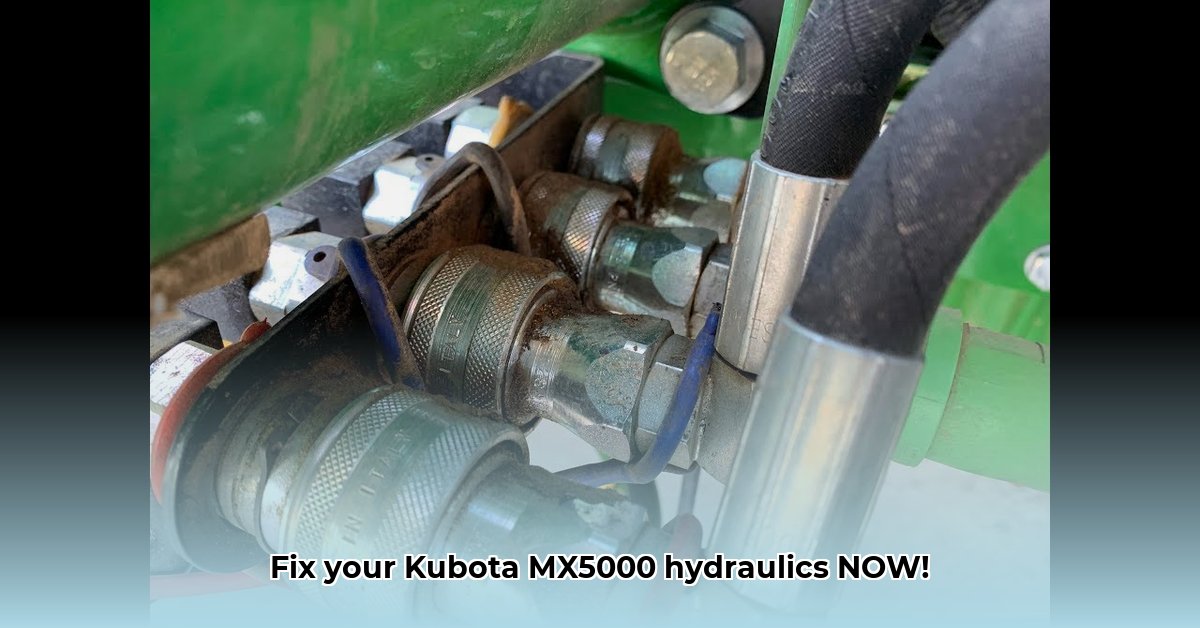
This guide provides step-by-step instructions on safely removing hydraulic hoses from a Kubota MX5000 tractor (and similar models). Improperly disconnecting hydraulic hoses can lead to serious injury and equipment damage. Always prioritize safety. For more detailed guidance, see this helpful guide.
Safety Precautions: Your First Priority
Working with high-pressure hydraulic systems demands meticulous attention to safety. Before you begin, ensure you have the following:
- Safety Glasses: Protect your eyes from potential hydraulic fluid sprays.
- Heavy-Duty Gloves: Shield your hands from cuts, abrasions, and hydraulic fluid.
- Absorbent Rags: Prepare to quickly soak up any spilled hydraulic fluid.
- Pressure Release: This is paramount. Completely relieve all pressure from the hydraulic system before attempting any disconnection. Failure to do so can result in serious injury from high-pressure fluid jets.
Relieving Hydraulic Pressure: A Critical Step
Releasing hydraulic pressure is a multi-step process crucial for safe hose removal. Incorrect procedures can result in unexpected high-pressure releases.
- Engine OFF: Completely shut off the tractor's engine.
- Lower Implements: Carefully lower any attached implements (loaders, backhoes, etc.) to their resting position.
- Control Lever Cycling: Gently move hydraulic control levers back and forth several times to bleed off residual pressure. Listen for the characteristic hiss of air escaping through the relief valves.
- Dedicated Relief Valve (If Applicable): Some Kubota MX5000 models have a dedicated pressure relief valve (consult your owner's manual). Use this valve according to the manufacturer's instructions.
- Pressure Check: After completing the above steps, gently move the hydraulic levers. Any resistance indicates that additional pressure needs to be released. Repeat steps 2-4 as necessary until all pressure is relieved. It's better to err on the side of caution.
Identifying Coupler Types: Understanding Your Connections
Kubota MX5000 tractors, and similar agricultural machinery, may use different types of quick-disconnect couplers. Proper identification is crucial for safe and efficient disconnection. Common types include:
- "Jerk-Out" Couplers: These require a firm, straight pull to disconnect once pressure is released.
- Pioneer Couplers: These usually have a sleeve or collar that needs to be unlocked or engaged before disconnection. Look for a release lever or clip. (See illustrations in your owner's manual.)
Familiarize yourself with the specific coupler type(s) on your tractor before proceeding.
Disconnecting the Hydraulic Hose: A Step-by-Step Guide
The disconnection procedure varies depending on the coupler type. Remember: always confirm pressure is completely relieved before beginning.
For "Jerk-Out" Couplers:
- Final Pressure Check: Verify that all pressure is released.
- Firm Grip: Hold the coupler firmly.
- Straight Pull: Pull straight out with a firm but controlled motion. Avoid jerking or twisting.
For Pioneer Couplers:
- Final Pressure Check: Repeat the pressure check!
- Locate Release Mechanism: Identify and activate the release mechanism (sleeve, collar, lever).
- Disconnect Hose: Once the mechanism is engaged, carefully pull the hose free.
Troubleshooting Common Issues
Problem: Stiff Couplers
Solution: Do not force a stiff coupler. Check for debris or misalignment. A small amount of appropriate hydraulic lubricant (check your owner's manual for recommended lubricants) may help.
Problem: Stuck Sleeves
Solution: Consult your owner's manual. A small, non-metallic tool may be required to gently dislodge the sleeve. Avoid excessive force.
Problem: Partial Disconnections
Solution: Carefully reseat the coupler and verify that pressure is completely released before attempting disconnection again.
Reconnecting the Hydraulic Hose: Ensuring a Secure Seal
Reconnect the hose by carefully aligning the coupler and pushing firmly until it engages securely. You should hear or feel a positive locking action (a click). Verify the connection is leak-free before restarting the engine.
Conclusion: Safety First, Always
This guide provides general instructions. Always consult your Kubota MX5000 owner's manual for detailed, model-specific information and safety precautions. Prioritizing safety remains the most critical step in working with high-pressure hydraulic systems. Remember: a moment of carelessness can have severe consequences.